For many people, yes. Implants cost more upfront, about $3,000–$6,000 per tooth, but they have a strong long-term record, with about 96% implant-level survival at 10 years in a 2019 systematic review, and they do not rely on neighboring teeth. Whether they are worth it for you depends on your health, budget and goals.
Key takeaways
- Implants usually cost more at the start but may cost less per year if they last for decades.
- They replace the tooth root and help keep bone in place, which bridges and dentures do not.
- Upkeep, crown replacement and gum health are part of the real cost.
- Health factors such as smoking and uncontrolled diabetes affect both risk and value.
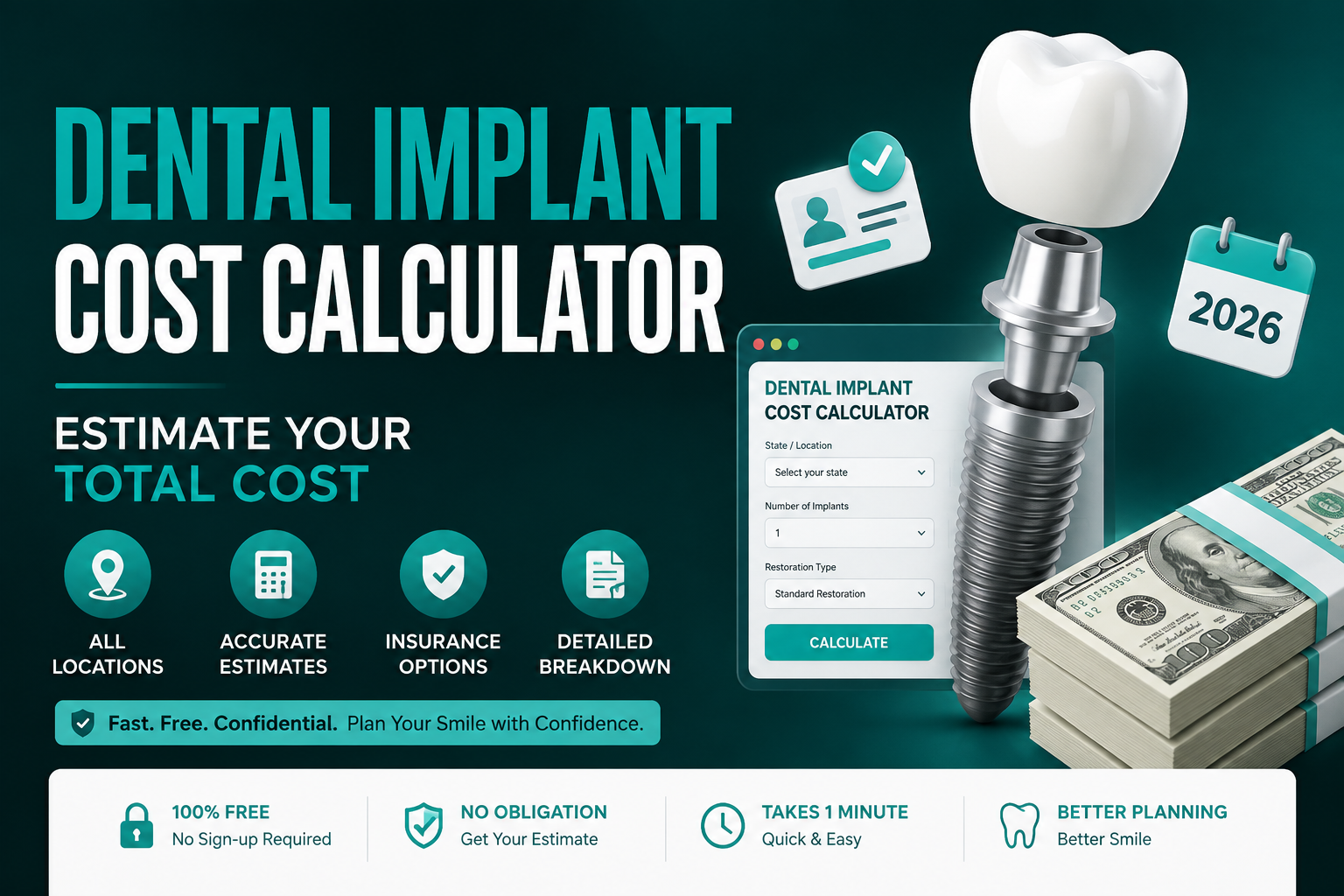
💡 Planning your dental budget? Use our free Dental Implants Cost Calculator to estimate your out-of-pocket costs by state in under a minute.
How do implants compare with bridges and dentures?
| Option | Upfront cost | Main trade-offs |
|---|---|---|
| Single implant | $3,000–$6,000 | Does not need neighboring teeth, needs surgery and healing time |
| Traditional bridge | About $2,500–$6,000 | Faster, but relies on and reshapes neighboring teeth |
| Conventional full denture | About $1,500–$4,000 per arch | Lowest upfront cost, removable, may loosen over time |
| Implant-retained denture | About $7,600–$13,300 per arch | More stable than a regular denture, still removable |
| Fixed full arch (All-on-4) | $11,600–$27,500 per arch | Fixed teeth, highest upfront cost |
See the details in implant-supported vs traditional dentures and single tooth implant cost.
Does the cost make sense over time?
Think in cost per year of use. As a simple illustration, not a prediction, a $4,500 implant that lasts 20 years works out to about $225 a year, while a $4,000 bridge replaced after 12 years is about $333 a year. Those results change with your case, your care and your dentist’s fees, so treat them as a way to frame the decision.
Add the ongoing costs, such as checkups, cleaning around the implant and an eventual crown replacement. Our guide to maintenance and long-term costs lists what to budget.
How long do dental implants last?
A 2019 systematic review of studies with at least 10 years of follow-up estimated implant-level survival at about 96%. Survival is not the same as being trouble-free. Crowns can wear or loosen, and gum disease around implants, called peri-implantitis, can cause bone loss. Good oral hygiene, regular checkups and avoiding smoking all help protect the result.
Who benefits most from implants?
- People with one or a few missing teeth who want to avoid altering healthy neighbors.
- Those who struggle with loose dentures and want a more stable bite.
- People with enough bone and healthy gums, or who can address bone loss with grafting.
- Those who value long-term durability and can afford the upfront cost or financing.
When might implants not be worth it?
- Uncontrolled diabetes, heavy smoking or active gum disease raise the risk of failure until they are managed.
- If the upfront cost would force high-interest debt, a lower-cost option may be wiser. See ways to reduce your total cost.
- Significant bone loss may require grafting, which adds cost and time.
Ask your dentist to compare options for your mouth, and review questions to ask before paying.
Dental Implants Cost Calculator
Calculate your customized dental implant costs in seconds before visiting a dental office. Choose your US state, tooth location, implant brand, and restoration type (single tooth, All-on-4, All-on-6, or full mouth) with complete itemized pricing.
Launch Dental Implants Cost Calculator →Are dental implants worth it: frequently asked questions
Are dental implants worth the money?
For many people yes, because implants have about 96% survival at 10 years in a 2019 systematic review and do not rely on neighboring teeth. The cost is higher upfront, so weigh your budget, health and goals.
Are implants better than a bridge?
Implants avoid altering neighboring teeth and help keep bone in place, while bridges are faster and often cost less upfront. The better choice depends on your teeth, bone and budget.
Are implants better than dentures?
Implants are usually more stable and comfortable, and implant-retained dentures cost about $7,600–$13,300 per arch compared with about $1,500–$4,000 for conventional dentures. Dentures cost less upfront.
How long do dental implants last?
The implant itself often lasts decades with good care, with about 96% survival at 10 years in a 2019 review. Crowns may need replacement sooner, and gum health strongly affects longevity.
What are the downsides of dental implants?
Higher upfront cost, surgery and several months of healing, and a risk of complications such as infection or gum disease around the implant. Smoking and uncontrolled diabetes raise that risk.
Who should not get dental implants?
People with uncontrolled medical conditions, active gum disease or significant bone loss may need treatment first, and some may be better served by another option. A dentist’s exam and scan decide.
Keep reading
Sources and how we calculated these numbers
Costs come from published 2026 US benchmarks, rounded for planning. The per-year comparison is a hypothetical illustration. Survival data come from a published systematic review. Last reviewed October 21, 2026. See our methodology.