In a 2026 state-by-state dataset, a single dental implant averages about $4,507 nationally, from $3,759 in Alabama (lowest) to $5,733 in California (highest). Prices track local cost of living closely, so urban and coastal areas generally cost more than rural and inland ones.
Key takeaways
- The gap between the cheapest and priciest state average is about $2,000 for one implant.
- State prices follow cost of living closely, with a reported correlation of 0.835.
- Within a state, city and clinic choice can matter as much as the state itself.
- Always compare itemized quotes, because what is included varies as much as price.
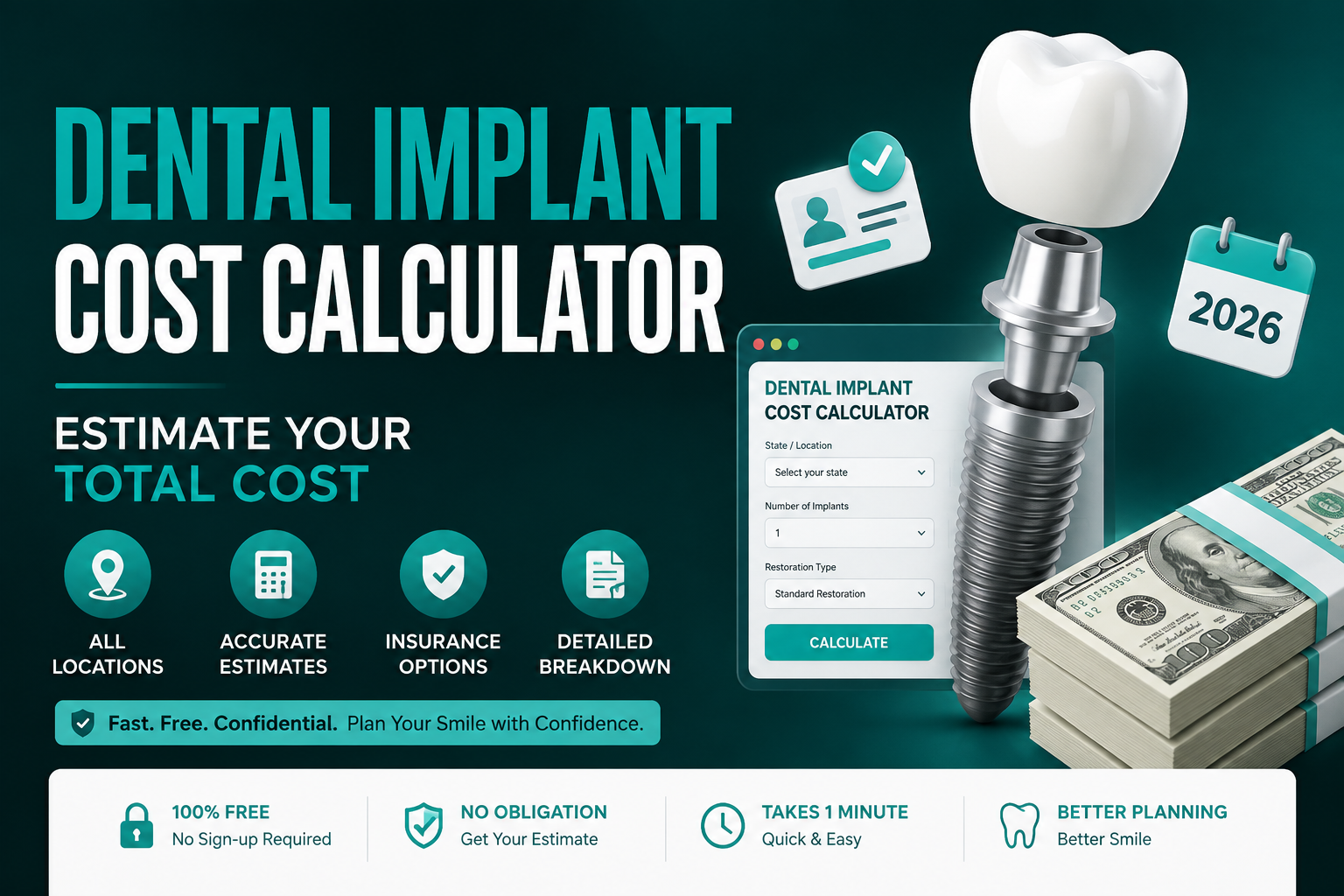
💡 Planning your dental budget? Use our free Dental Implants Cost Calculator to estimate your out-of-pocket costs by state in under a minute.
How much does the price vary by state?
| Measure | Average price | Compared with national average |
|---|---|---|
| National average | $4,507 | Baseline |
| Lowest state average (Alabama) | $3,759 | About 17% below |
| Highest state average (California) | $5,733 | About 27% above |
| California range | $4,780–$7,290 | Modeled low–high band for the state |
These figures come from an open dataset that covers all 50 states and DC. Our own calculators use a separate state cost-of-care index, from 0.83x in Mississippi to 1.25x in the District of Columbia (1.18x for California and 0.86x for Alabama), so the two sources rank a few states differently and should be read as separate benchmarks. Its implant series was checked against the CareCredit and ASQ360 average procedural cost study, with a rank correlation of 0.945 across 51 jurisdictions. We use only that implant series here, and the dataset’s authors corrected other series in July 2026. The dataset covers single implants, so use it as a regional guide for bigger treatments, not an exact multiplier.
Why does location change the price?
- Cost of living: rent, staff wages and overhead are higher in expensive areas.
- Local competition: markets with many specialists can have wider price ranges.
- Insurance and fee schedules: local fee schedules influence what practices charge.
- Lab and materials costs: these vary by region and by the lab a practice uses.
A published example contrasts about $3,000 at a rural practice with about $5,500 in a coastal urban market for similar single-implant treatment, which fits the pattern.
How do I use this for my budget?
- Start with your state’s tendency: above average if you live in a high-cost coastal region, below if you live in a lower-cost state.
- Use the calculator to pick your state and see an itemized range.
- Request two or three itemized quotes locally, and compare each line.
- Add extras you might need, such as extraction ($150–$500), a bone graft ($500–$3,500 in planning ranges) and sedation ($250–$800).
For the national base prices and example totals, see how much dental implants cost in the USA.
Can I save by treating in another state or city?
Sometimes, but weigh the extras. Travel, lodging and time off add up, and you need follow-up visits close to where the surgeon practices. A nearby lower-cost city or a dental school clinic may give most of the savings with fewer trade-offs. Read ways to reduce your total cost before you decide, and never choose on price alone. Ask about experience, warranty and who handles complications.
Dental Implants Cost Calculator
Calculate your customized dental implant costs in seconds before visiting a dental office. Choose your US state, tooth location, implant brand, and restoration type (single tooth, All-on-4, All-on-6, or full mouth) with complete itemized pricing.
Launch Dental Implants Cost Calculator →Dental implant cost by state: frequently asked questions
Which state has the cheapest dental implants?
In a 2026 dataset, Alabama had the lowest average single-implant price at $3,759, about 17% below the national average of $4,507. Prices vary within each state by city and clinic.
Which state has the most expensive dental implants?
California had the highest state average in the same dataset at $5,733, about 27% above the national average, with a modeled range of $4,780–$7,290.
What is the average cost of a dental implant in the US?
About $4,507 for a single implant in a 2026 state dataset, with typical all-in prices of $3,000–$6,000 depending on what the quote includes, such as the abutment and crown.
Why are dental implants more expensive in some states?
Prices follow local costs such as rent, wages and lab fees, and the dataset reports a close link with cost of living. Urban and coastal areas generally cost more than rural and inland areas.
Is it worth traveling to another state for implants?
Sometimes, but travel, lodging and follow-up care can cancel savings. Compare itemized quotes, check the surgeon’s experience, and plan for who will handle problems after you return home.
Does state pricing apply to full-arch implants?
The pattern usually carries over, with higher-cost regions charging more, but the dataset covers single implants only. Use it as a guide and request itemized quotes for full-arch treatment.
Keep reading
Sources and how we calculated these numbers
State figures come from the Real Dental Costs US Dental Cost Index (2026), version 2, implant series only. Percentages compare each state average with the $4,507 national average and are rounded. Last reviewed October 21, 2026. See our methodology.